Fair rents decided

DUNDEE COURIER

SATURDAY 21 DECEMBER 1912

FIFE CASES ARE HEARD

AT SITTING OF SCOTTISH LAND COURT

The Scottish Land Court sat yesterday in the Court Chambers, 1 Grosvenor Crescent, Edinburgh, when three applications to fix a first fair rent was heard. The Bench were Lord Kennedy and Messrs Alexander Dewar, E E Morrison, and Norman Reid.

The first applicant was Alexander Watt, Cairneyhill, Carnock, the respondent being Mrs Margaret Christie. The rent was given as £7.

Examined by Mr William Balfour, SSC, Watt said he entered the place ten years ago last month. He found they had been keeping hens in the house. He had effected numerous repairs on the property.

Cross-examined – He had made an offer of £250 for the house, but latterly had backed out of this offer. His application was for the purpose of getting the rent as low as possible.

John Robertson, Cairneyhill, said he was of opinion that the structures put up by the tenant were of less value than the dwelling house. A rent of £7 was a very reasonable rent. Another £1 could be got for it easily.

The second case was that of Mrs Janet Thomson or Rennie, also residing at Cairneyhill, Carnock, the respondent being the Rev P C Duncanson. The rent given was £8, the holding extending to an acre and three-quarters. It was stated that applicant’s husband had been the tenant for twenty-one years past.

In the last case, Thomas Fotheringham was applicant, the respondents being the Rev P C Duncanson, William Paterson, Wm Fotheringham, sen., and Wm Fotheringham, jun. The prices of land in question were rented at £12 2s, £2, £9 10s and £5 respectively.

The Court announced that they would make their first inspection on the 27th of this month if the weather permitted.

*********************************

Dear blog reader

It sounds like there might be more to this, if I find any more I’ll be sure to share it with you!

Jacqueline

Sir Robert Anstruther at Cairneyhill – a political hustings

Dear blog reader

Sir Robert Anstruther, 5th Baronet, was a Scottish Liberal Party politician who was the MP for Fife between 1864 and 1880 and the MP for St Andrews from 1885 until his death in 1886. He was also the Lord Lieutenant of Fife from 1864 to 1886.

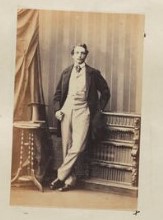
Below is Sir Robert Anstruther’s portrait and an account of his hustings meeting in Cairneyhill in 1864.

I hope you find this interesting – and an insight on the interests of Cairneyhill voters in 1864.

Jacqueline

******************************

DUNFERMLINE SATURDAY PRESS

SATURDAY 16 APRIL 1864

SIR ROBERT ANSTRUTHER AT CAIRNEYHILL

Sir Robert Anstruther addressed the electors of Cairneyhill in the UP Church, on Wednesday afternoon – the Rev Mr More occupying the chair.

The chairman after referring to the earnest and faithful manner in which the late member discharged his public duties, said – should the candidate now before you succeed in obtaining the object in view, which I hope he will, and attain some measure of the esteem and love of the constituency Mr Wemyss possessed, we will have reason to be thankful, and there will be less ground for lamenting the death of our late representative. I now introduce to you Sir Robert Anstruther – (cheers) – and if you have any questions to put to him, I hope you will bring them forward at the close of his address.

Sir Robert Anstruther said – Mr Chairman and friends, I hope I may say with all honesty of heart and purpose, that I sympathise with you in the loss of your dear Member. One of the points in which I feel he was superior to you was, that he had the art of winning hearts. Gentlemen, it is very easy to win heads, to bring a man round to give you his support in a political matter, but I conceive that Mr Wemyss did much more than that, for he had the knack of making everybody love him; and you will support me when I say that both his political friends and enemies had a sincere affection for him. They admired him as a man who was a useful and hard-working member; and though I have heard his enemies say, that he did speak enough in the House of Commons, I may be permitted to say, that the man who works the hardest is often the man who holds his tongue. I desire nothing more, whether I shall succeed Mr Wemyss or not – I desire nothing more than to succeed him in this, to succeed him in getting his place in the hearts of the constituency, a place, sir, which I conceive to be the highest honour I should wish to possess.

Mr Fraser, Inverkeithing, who had just arrived here, intimated that Mr Thomson had at his meeting in Dunfermline, announced that as the news from the whole of the county was so discouraging, he had determined to retire without going to a poll. (Applause).

Mr MacFarlane – The only regret we have is that we have not to go the poll, for there is almost a certainty that the majority which Mr Wemyss had, would be doubled on this occassion. (Cheers).

Sir Robert resumed – Mr Chairman and friends, allow me to congratulate you upon being the first place to hear this good news. I wish, having heard this welcome announcement – if I may now presume to stand before you as the man who will, without further opposition, succeed to the representation of the county of Fife – that I could only state my feeling of the importance of the situation. The only promise I have made, and which I hope I shall be able to fulfill, is, that there shall be nothing wanting on my part in the faithful discharge of my duty; and I can only say that it shall not be for want of trying, for my whole effort shall be to be faithful to discharge it. Mr Chairman, it is hardly necessary for me to detain you very long upon general subjects. I have today stood a savage volley of questions in Dunfermline, questions not prompted by a spirit of honest enquiry, but put for the opposite purpose, and with the view of bamboozling the Liberal candidate. Now, I would be glad if I could say that my friend Mr Hunt did not originate his questions, for they certainly did not do him much credit, because a more futile, feeble set of questions I never heard, and yet, he really thought I was to be frightened by them. Having had this formidable array of questions fired upon me, I hope I may say, I have along with me the support of the Liberal constituency, and I conceive there are many men among us who have not votes, but who are well qualified to possess them – qualified, not only because of their intelligence, but for the reason that they are straightforward men, who have at heart, the glory of their Queen and the good of their country. The Conservatives say, they are not fit to have a voice in the government of the country. Sir, these men manage their affairs as well as other people, very often better than those who have more education, and who profess to have more sense. But the Conservatives say they will swamp the country; and then after telling you this, they bring in a Reform Bill, and take a pride in it, and say they are as good as the Liberals. They do this simply because they know they dare not otherwise come before the country. (Hear, hear). Speaking of the Church rates, he continued – This question has occupied learned heads for years, and how can you expect that a young man like me can settle it? At the same time my sympathies in the matter of Church rates are decidedly with the dissenting bodies. Now, Sir, I wish to say one word about the Confederates. I saw an article, the other day, in a paper for which I have no great respect, and the writer wondered how any gentleman could presume to come before the electors of Fife, and ask their suffrages, and all the while be a supporter of slavery. Sir, that statement is false, and it was made with the view of representing me to the electors to hold sentiments which I utterly detest. I conceive slavery is opposed to all the laws of God, and therefore opposed to all the laws of man; what I said was, that if men hold certain opinions, whether we approve of them or not, that is no reason who they should be coerced into accepting a form of government which they do not want. I do not wish to go into the American question. We sympathise most deeply with that unhappy country in all the horrors she is now suffering. But there can be no doubt that our Government has taken the right course in the question, and I conceive that the conduct of Britain will be handed down in history, as one of the most extraordinary and disinterested courses ever known. In a wordly-wise point of view, we might have said, here is a great and powerful nation, torn by strife, and we might have taken the side of the one, and extinguished the other. Yet, we have maintained a neutrality which reflects the highest credit upon the Government which conducted it. (Applause). So far as I know, there has never been recorded in history an instance in which a nation has acted so entirely from disinterested motives as in the present case. I need hardly detain you longer; if there is any gentleman who wishes to ask me any questions, I trust he will not be deterred by the remarks I have made about those put to me in Dunfermline.

There were no questions put; but Mr Smeaton remarked, ‘You will not be able to break your promises, for you have never made any.’ (Laughter).

The chairman then moved that the meeting consider Sir Robert Anstruther a fit and proper person to represent them in Parliament, which was carried unanimously.

A vote of thanks to the chairman, proposed by Sir Robert Anstruther, concluded the business of the meeting.

Cairneyhill Valuation Roll 1855

Dear blog reader

Welcome to the first part in a new series, a list of the people, with occupation where known, who were connected with Cairneyhill in 1855.

Hopefully those of you with ancestors from Cairneyhill will find this list useful.

************************

David Addie, weaver
Henry Arnot
Mrs John Bald
Andrew Blair
Lockhart Blallock (possibly Blalloch?)
George Bowie
Mrs Calderhead
John Calderhead
Robert Coye
Francis Crombie
Janet Cuddie or Manclark
John Cunningham
David Cunningham, weaver
Peter Deas, weaver
Henry Deas
Widow Downie
John Duncanson, blacksmith
Andrew Duncanson
Mrs Thomas Duncanson
Thomas Duncanson
Miss Duncanson
Francis Duncanson
Archibald Duncanson
William Duncanson
Robert Erskine
William Erskine
William Finlayson
Henry Fotheringham
John Gilmour
David Hempseed
John Henderson
John Herron
Peter Hodge
Thomas Hodge
William Hodge
Alexander Hodge
Robert Howieson
Robert Kirk
James Lawson
Peter Mitchell
George Mitchell
Alexander Morris
George Paterson
William Paterson
Robert Paterson
William Philp
Robert Philp
David Philp
Thomas Reid
Mary Rennie
Charles Robertson
James Smittan
David Steen
Mrs Charles Thomson
Mrs Mason Thomson
Andrew Tod
James Todd
Campbell Walker
Alexander Walls
John Wightman
Margaret Wightman
Widow Wilson
Thomas Wilson
William Wilson
George Young
William Young

Cairneyhill’s Faith History

Dear blog reader

One of the ‘tag lines’ of my studies of the people and history of Cairneyhill is that Cairneyhill is very significant theologically in Scotland.

The attached article gives a great deal of detail on Cairneyhill Church from it’s foundation in 1752 until 1861 but first some general history.

For a long time the people in the Cairneyhill were dissenters and Covenanters. In early 18th century many local dissenters from Torryburn, Cairneyhill, Carnock and Dunfermline joined forces to form a ‘praying society’ which worshiped in a barn at Drumfin Farm, which still exists to the north-west of Cairneyhill.

On 1 November 1737 the praying society, which by now was quite large, agreed to join the Associate Presbytery, also called the Secession Church, which was a group of ministers who had left the Church of Scotland in 1733. The members of the praying society still wanted some Independence but were put under the care of Reverend Ralph Erskine who had previously left the Church of Scotland. (I was so excited personally a few months ago when researching my own family history to find that a branch with many Church ministers had married into the Erskine family as the Erskine family are so well-known in the Dunfermline area).

In 1747 the Associate Presbytery/Secession Church had a breach because of a disagreement over a burgher’s/burgess’ oath which required holders of public offices to affirm approval of the country’s Established Church, that is the Church of Scotland.

A proportion of the Associate Presbytery/Secession Church disagreed with the burgher’s/burgess’ oath and that portion became the Anti Burghers.

The significant result of that breach was that the Church in Cairneyhill, built in 1752, was the first Anti Burgher Church built in Scotland.

Subsequent to 1752, there were many subsequent mergers which dictated which group of Churches Cairneyhill Church belonged to: in 1820 the Burgher and Anti Burgher Churches reunited to form the United Secession Church, in 1847 the United Secession Church merged with the Relief Church to form the United Presbyterian Church, in 1900 the United Presbyterian Church merged with most of the Free Church to form the United Free Church and in 1929, when most of the United Free Church reunited with the Church of Scotland, Cairneyhill Church rejoined the Church of Scotland.

So, dear blog reader, the above is the general history of the dissenting Churches that Cairneyhill Church belonged to from 1752 until 1929 and below are more specific details of Cairneyhill Church’s history from 1752 until 1861:

DUNFERMLINE SATURDAY PRESS 27 JULY 1861

CONGREGATIONAL SOIREE AT CAIRNEYHILL

A soiree was held in Cairneyhill Church on Monday night, to celebrate the entire liquidation of the debt on the Church and other property belonging to the congregation – the Rev John More in the chair. After prayer by the Rev Dr Johnston, and the audience singing the 2nd Paraphrase.

The Chairman said he was happy to see so many friends present to sympathise with the happy congregation on this joyous occasion. Most of them were aware that debt was a very common thing, and it was also an evil thing to have, and a difficult thing to get rid of. Mr More then proceeded to detail the various improvements that had been made on the Church and other property, from its foundation 107 years ago to the present time.

Mr Bruce said that the object of the meeting was to celebrate the extinction of their congregation debt, and of course it was to celebrate a deliverance from a most annoying yoke of bondage – it had been found so all along. The committee had requested him to give a short account of how and when the debt was contracted, and how and when it was reduced, and ultimately swept away altogether. When the Church was built, 107 years ago, it was a very rude building, though perhaps not more so than other country Churches of that time; still there was some debt rested upon it when it was finished, somewhere about £40, and this was very little to have built a Church. That debt was allowed to remain, and the congregation seemed to have given themselves very little trouble about it. At that time debt seemed to be a bond of union among the members of a Christian society. It proved a mistake to them, however, for they had only existed 34 years with this bond of union, when the half of them left and went to Dunfermline, and erected a place of worship for themselves in Chalmers Street – now being rebuilt. After this the debt would seem neither to have been augmented not diminished, for nearly forty years.

About the year 1790, and onward to 1794, or some part of 1795, the debt was considerably augmented. At that time they took the roof off the Church, and put a new one on. In the year 1794 they agreed to build a manse, and before that they had purchased the house and garden to the rest of the manse, which was now used as a barn. All these things put together, they found, when they were finished, that £100 had been added to the debt, and no great sum either for building a manse, and the rest of the repairs. In the year 1795, the debt was £140.

Well, he supposed, the debt remained much the same till about the year 1814, when their present pastor was ordained. Then repairs had been made on the manse, and these repairs still further augmented the debt. The galleries were put up about the year 1829, and with the other repairs that had been made before the galleries were put up, added about £110 to the debt. At that time the debt was about £250, and other repairs that were effected in the course of time added over £40. Then the debt came to be at its highest point, for £290 or £291 was the highest point to which it reached.

Well, the scale began to turn, and the first reduction of the debt was by a respectable old member of the congregation, who lent them £10 for some object, and previous to his death he made them a present of the money, thus reducing the debt to £281. By-and-bye, there was a small sum of £6 paid, and this further reduced it to £275. In the year 1849 a motion was made in the congregation to try to throw off a portion of this debt. It would still be in the recollection of many that it was tried by taking out a number of shares, and they had a considerable time to pay them. The plan succeeded admirably, and in the year 1850 they had subscribed and collected £110, which reduced the debt to £165. The debt was now coming down as fast or still faster than it was contracted, but there still hung on them that £165 until the beginning of 1860. Some parties in the congregation took it into their heads to try the Debt Liquidating Board, as a considerable sum of money had been thrown into that board by the Ferguson bequest for this purpose, among others, and as they had been in the habit of contributing to this board, a correspondence was entered into by one of their elders and some of the members of the board, the result of which was that two of these gentlemen waited on the congregation in the month of February 1860, and entered into full conversation with those who chose to attend.

The result was, that after hearing parties, and looking at the matter, they agreed to give £50, provided the congregation would raise the rest. All the answer the managers and elders could give was, that they would try. The congregation entered into the thing with spirit, and before long the whole of the required sum was subscribed. (Applause.) They had more than a year to pay it; it was requested to be paid in April last. Well, it was all paid. Some of their friends, both near at hand and far away, had aided them in this matter, for they desired to feel truly thankful. In due time, the whole amount was in the treasurer’s hands, and a circular was sent to Edinburgh, to be filled up, and as soon as this was filled up, the £50 was forthcoming. This put it into the treasurer’s power to pay the whole debt and something over. (Applause.) He concluded by urging upon all, even the poorest, to work for the good of the congregation.

The meeting was afterwards addressed on different subjects by Dr Johnston, Limekilns; Rev P C Duncanson, West Calder; and Rev M McOwan, Perth.

The musical department was conducted by an efficient choir, under the leadership of Mr Tweedie, Dunfermline. All the anthems were well sung, but perhaps the best was ‘Rejoice in the Lord’ composed by the late John Campbell. Mr J L Miller also played several pieces on the harmonium.

The proceedings were concluded about ten o’clock with the usual votes of thanks.

Margaret Paton’s donkey and Sir Arthur Halkett

Dear blog reader

I do hope you enjoy this description of one of Cairneyhill’s bygone modes of transport which I only discovered recently.

Jacqueline

**************************

DUNDEE COURIER SATURDAY 17 MAY 1862

A GENTLEMAN AND A CHRISTIAN

Many of our fellow townsmen will be unacquainted with old Margaret Paton, who acts as a carrier between Cairneyhill and Dunfermline with her donkey cart – but there will be few who have not cast an eye of admiring respect on the little stout and still rosy-cheeked old woman.

Margaret is now 84 years of age, and shows as firm a frame and undaunted a pluck as if she had a lease of signed and sealed to carry it out to the hundred. Besides her health, strength, and high spirits, she carries an honest, grateful heart beneath her druggit gown, and at the present time she has a noble story to tell that, while reflecting no small credit on herself, stamps the character of one of our neighbouring proprietors with the native and genuine superscription of ‘a gentleman and a Christian’.

A short time ago Margaret’s breadwinner, her donkey, was nearly done up, and on its last legs, and how to get another to replace it was beyond the depth of her purse, and, it may be, the extent of her credit. One day lately, as she was toiling along the road with her poor old ass, every footlift of which threatened to be its last, ‘Wha did I foregather wi,’ says she, ‘but his honour, Sir Arthur Hawkett.’ ‘Is this you, Margaret,’ says he? ‘Ye’re no very weel set on wi’ yer donkey, I see. He’ll tak a lang lang time to tak’ ye frae Cairneyhill to Dunfermline, I am sure, frae the pace that the puir brutes noo making.’ ‘Indeed, Sir Arthur,’ says I, ‘it took us the day three guid hoors to measure the road atween Cairneyhill and Crossford – it did a’ that’ – ‘That manna be ony longer,’ says he – ‘ye maun get a new donkey – but whether it is to be you or me that’s to be at the expense o’t? That’s the question.’ ‘Hoot yer honour,’ says I, ‘ye ken that had I haen the needfu’ o’ my ain I would haen anither donkey lang afore this. But times are sadly changed noo, Sir Arthur, and pouches are no sae bauld and buirdly as they aince war.’

‘Aweel then,’ says he, ‘since your pouch canna do’t, then mine mau, that’s a.’ ‘Ah, Sir Arthus,’ says I, ‘ye maun excuse me, I hae seen mony imperfect conclusions in mu lifetime, that I am a wee thing tarred wi auld Saunt Tammas’s unbelieving speerit. I maun find things just in my hand afore I’ll hae faith in them.’ ‘Never you fear, Margaret’ says he, ‘Awa ye gang and bargain for a new ass, and come doon to my house, and I’ll pay the price o’t.’ ‘Was that no noble offer in the guid young gentleman. It was keeping me frae beggin’, keepin’ me like an auld independent wifie. I gaed awa hame and sent aff a friend to bargain for anither donkey, it was this ane. Three pound was to be the price o’t, and the bargain was made, I set awa myself to Pitfirrane House. Losh [illegible] hoo I trummelled, as I gaed along a long trance under the guidance o’ a servant, trummelled like a juniper buss, as we drew near the room whar Sir Arthur was. At length and lang, he sees me and cries, ‘Margaret, hae ye bargained for an ass yet?’ Makin a curtchy, I said I had, and that it would cost three pounds. I had hardly got oot the words whan his han’ was in his oxter pouch, an’ oot cam’ the pocket-book, an in to my lap fell the three pounds. I tauld him that I would maybe gar twa o’ them do, and wishes him to tak’ back ane. ‘Toots,’ says he, ‘if ye can gar twa i’ them do, keep ye the ither, for ye well deserve it.’ There’s a man, an’ a gentleman, an’ a verra Nathaniel for you. I could kneel doon and’ kiss the verra shoe points o’ the noble youth. The blessin’ o’ God be wi’ him for ever more!’

*************************************

It is believed this is the Arthur Halkett referred to:

Death of Mrs More, Seminary Founder

DUNDEE ADVERTISER, THURSDAY 27 SEPTEMBER 1866

DEATH OF MRS MORE, CAIRNEYHILL

Our obituary last Saturday recorded the death of Mrs More, wife of the Rev John More, in the 74th year of her age.

Mrs More was the eldest daughter of the Rev Dr Paxton, of Edinburgh, a popular preacher in his day, and Professor of Divinity in the Original Secession Church, to which he belonged. Mrs More inherited much of the talent and genius by which her father was distinguished. Her life has been a useful and honoured one. The seminary at Cairneyhill for the training of young ladies, conducted by Mrs More and family, has long held a high place in public estimation, and exerted no little influence in reviving the standard of taste and education in the neighbourhood, and we believe, throughout Scotland.

The funeral of Mrs More took place on Monday, and was numerously attended, and amongst others there were present – Rev Dr Johnston, Limekilns; Rev Messrs McDowall, Alloa; Mathieson, Alloa; Welsh, Kincardine; Fleming, Inverkeithing; Grahame, Crossgates; Gilston, Carnock; Doig, Torryburn; Milroy, Torryburn; and Young and Russell, Dunfermline; Dr Dewar, Dunfermline; Thomas Grinton Esq, Thomas Younger Esq, William J Sloan Esq, William More etc etc.

********************************************

Dear blog reader

As examples of those who attended Mrs More’s seminary, here are the young ladies who were attending the seminary at the time of the 1851 and 1861 censuses.

1851:

Elizabeth Kerr, 19, born East Indies
Jane Ure, 16, born Glasgow
Isabella Ure, 15, born Glasgow
Helen Neilson, 16, born Glasgow
Helen Yeamen, 18, born Dundee
Susan Anderson, 17, born Cupar Angus
Amelia Muir, 18, born Leith
Margaret Wilson, 16, born Limekilns
Agnes Banckenrigg, 13, born Edinburgh
Agnes Paton, 13, born Tillicoultry
Catherine Paton, 13, born Tillicoultry
Janet Tod, 9, born Balerno
Isabella Tod, 7, born Balerno

1861:

Christian Anderson, 16, born Dunfermline
Sarah H McGregor, 14, born England
Margaret Anderson, 14, born Pathhead
Isabella Nicoll, 12, born Dundee
Helen Christie, 11, born Perth


Cairneyhill Young Men’s Society – 1860

DUNFERMLINE PRESS THURSDAY 15 MARCH 1860

CAIRNEYHILL

SOIREE

On Thursday evening a soiree, under the auspices of the Cairneyhill Young Men’s Society, was held in the village school-room – the Rev John More in the chair. Throughout Thursday the greatest demand for tickets continued up to the very hour of meeting; and though the school-room was crammed almost beyond endurance, multitudes had to forego the pleasure of being present through sheer want of room.

The meeting having been constituted by praise and prayer, the Rev Mr More inaugurated the proceedings by a brief and appropriate address. After a service of fruit, the Chairman called upon Mrs Taylor, who sung ‘Barney O’Hea’ with peculiar archness and excellence. Mr Locke having given ‘Corn riggs are bonnie’ in his own true and tasteful style, and Mr Miller having rendered with good effect ‘Woo’d and married an a’ ‘ – the Rev P C Duncanson delivered an address upon ‘Companionship’. This address has all the good qualities of a good soiree speech – lively without being flippant, and exhaustive without being tedious.

The vocalists having again regaled the company with several of the finest of all Caledonia’s airs, and another service of fruit having been partaken of, the Rev George Morris delivered an address on Egyptian antiquities, as illustrative and corroborative of the truth of the Bible. This address, well got up, and manifesting very considerable familiarity with the subject treated, was, upon the whole, too elaborate for the kind of meeting at which it was delivered.

The musical party having again sung some of the most appropriate of our national ditties, Mr Clark, Cairneyhill, in a neat speech, moved that the thanks of the meeting be given to the speakers; and a vote of thanks having been given to the chairman, the company, after singing ‘Rule Britannia’, broke up a little before eleven o’clock, highly delighted with the evening’s entertainment.

1923 Sale of a Cairneyhill Fruit Farm

THE SCOTSMAN SATURDAY 11TH AUGUST 1923

FRUIT FARM AND DWELLING-HOUSE AT CAIRNEYHILL FOR SALE

For sale by private bargain, that property consisting of land and dwelling-house, on the south side of the Main Road in the village of Cairneyhill, near Dunfermline, and known as ‘Cairneyhill fruit farm’. The land, which extends to about two acres, is highly productive for market garden purposes. The present stock consists of about 5000 raspberry bushes, 400 red currant bushes, nearly three-quarters of an acre of strawberries, all in full bearing, while the remainder of the land is cropped with vegetables. There is also an acre and a half of land adjoining, which is used as a market garden, and of which a lease can be obtained. The dwelling-house, which is supplied with water and gas, and is at present vacant, contains three rooms, kitchen and conveniences.

The village of Cairneyhill is about three miles west of Dunfermline. The property is within two minutes’ walk of the railway station, and the buses between Culross and Dunfermline pass the door several times each day. There is a large population in the neighbourhood, and a great demand for all kinds of fruit and vegetables. Early entry can be arranged. Feu duty £1 19s 5d.

Offers will be received by Thomas Blair & Sons, Dunfermline, up to 21st August.

Electoral Roll 1879

Dear blog reader, this week a name-rich source for any of you with ancestors from Cairneyhill.

FIFESHIRE JOURNAL 27 NOVEMBER 1879

THE VOTERS’ ROLL FOR THE COUNTY

CARNOCK POLLING DISTRICT

CARNOCK PARISH (which included Cairneyhill)

Bald, James, weaver, Cairneyhill
Blair, Thos, writer, Dunfermline, Cairneyhill
Brown, R Hope, clergyman, Cairneyhill
Bruce, Peter, factor, Cairneyhill
Bruce, William, carter, Cairneyhill
Calderhead, John, weaver, Cairneyhill
Chalmers, George, innkeeper, Cairneyhill
Cunningham, Alexander, carter, Cairneyhill
Deas, Henry, weaver, Cairneyhill
Dick, William, late farmer, Cairneyhill
Dobbie, Thomas, labourer, Cairneyhill
Drysdale, William, weaver, Cairneyhill
Duncanson, James, builder, Cairneyhill
Duncanson, J, draper, Burntisland, Cairneyhill
Duncanson, Peter C, clergyman, Cairneyhill
Erskine, Alexander, land labourer, Cairneyhill
Erskine, John, carter, Cairneyhill
Erskine, William, M.D., Cairneyhill
Fotheringham, William, labourer, Cairneyhill
Gardiner, John, Cairneyhill
Gilmour, John, weaver, Cairneyhill
Herron, Robert, Nether Pitdinnie
Howieson, John, joiner, Cairneyhill
Kerr, John, farmer, Pitdinnie
Lawson, John, retired farmer, Cairneyhill
Moir, John, clergyman, Cairneyhill
Morris, J, physician, Dunfermline, Cairneyhill
Morris, William, labourer, Cairneyhill
Paterson, George, weaver, Cairneyhill
Philp, John, labourer, Cairneyhill
Robertson, John, joiner, Cairneyhill
Thomson, John,carter, Cairneyhill
Thomson, Robert, draper, Cairneyhill
Watt, David, farmer, Pitdinnie
Young, Alexander, labourer, Cairneyhill
Young, George, labourer, Cairneyhill

1868 Church Minister’s opinion on walking speed

Dear blog reader

I’ve always been fascinated by the idea that David Borland, the Cairneyhill Church minister in 1868, felt the need to write to The Scotsman about walking speed and so this week I share this quirkiness with you.

Jacqueline

****************************************************************************

THE SCOTSMAN 24 MARCH 1868

LETTERS TO THE EDITOR

PRETTY TALL PEDESTRIANISM

Cairneyhill U P Manse, March 19, 1868

Sir – I notice in today’s Scotsman an extract from a Yankee newspaper (the Boston Advertiser), in which a dinner was eaten and an ovation held by Mr Dickens and his friends over the astounding feat of performing twelve miles’ walking in two hours and forty-eight minutes. You will observe this is just 168 minutes to twelve miles, or one mile in fourteen minutes.

Now, we can scarcely conceive of a person who can do his thirty miles ‘on end’ calling this ‘pretty tall pedestrianism’. We fear Yankee nerve and muscle must have lost somewhat of their elasticity on the other side of the pond. I remember once, after a walk of over twenty miles on a hot July day, doing an additional eight, just by way of finish, within an hour and three-quarters; and I have a vivid recollection of once, when a lad of sixteen, cutting a caper at the half-way milestone between Edinburgh and Lanark, having accomplished that distance – sixteen miles – in just forty-two minutes more than these tall Yankees took to their dozen. But what I consider a greater feat that either of these was a ten-mile walk accomplished in two and a half hours on soft snow, eighteen inches deep; and after that, with fifteen minutes’ breathing, conducting with my usual comfort a double diet of worship in a country church, preaching twice without an interval.

I do not make such statements to make folks stare and cry, ‘Bravo! What a pretty fellow he must be;’ but simply to prick this wind-bag of Yankee bounce.

I am, &c,

PERAMBULATOR CLERICUS